

The complete guide
How To Use Reflective Pinwheels To Keep Birds Off Your Garden
The problem with birds and the stuff you grow
You spend weeks getting the strawberries right. One morning you walk out and half of them have been pecked open. Or the lettuce seedlings you planted on the weekend have been pulled out and scattered. Or the balcony rail has a fresh layer of droppings on it again, right where you like to sit. Birds are not being spiteful. They are doing what works for them, and your garden has food, shelter and a clear view. Once they have decided a spot is safe, they come back daily and bring company. The issue is rarely the first bird. It is the twentieth. Most people start with something cheap and static. An old CD on a string, a plastic owl, a bit of tape tied to a cane. These usually work for a few days and then stop, because birds are good at learning that a thing which never changes cannot hurt them. The deterrents that hold up longer are the ones that keep moving in ways a bird cannot predict. ## How reflective pinwheels actually work
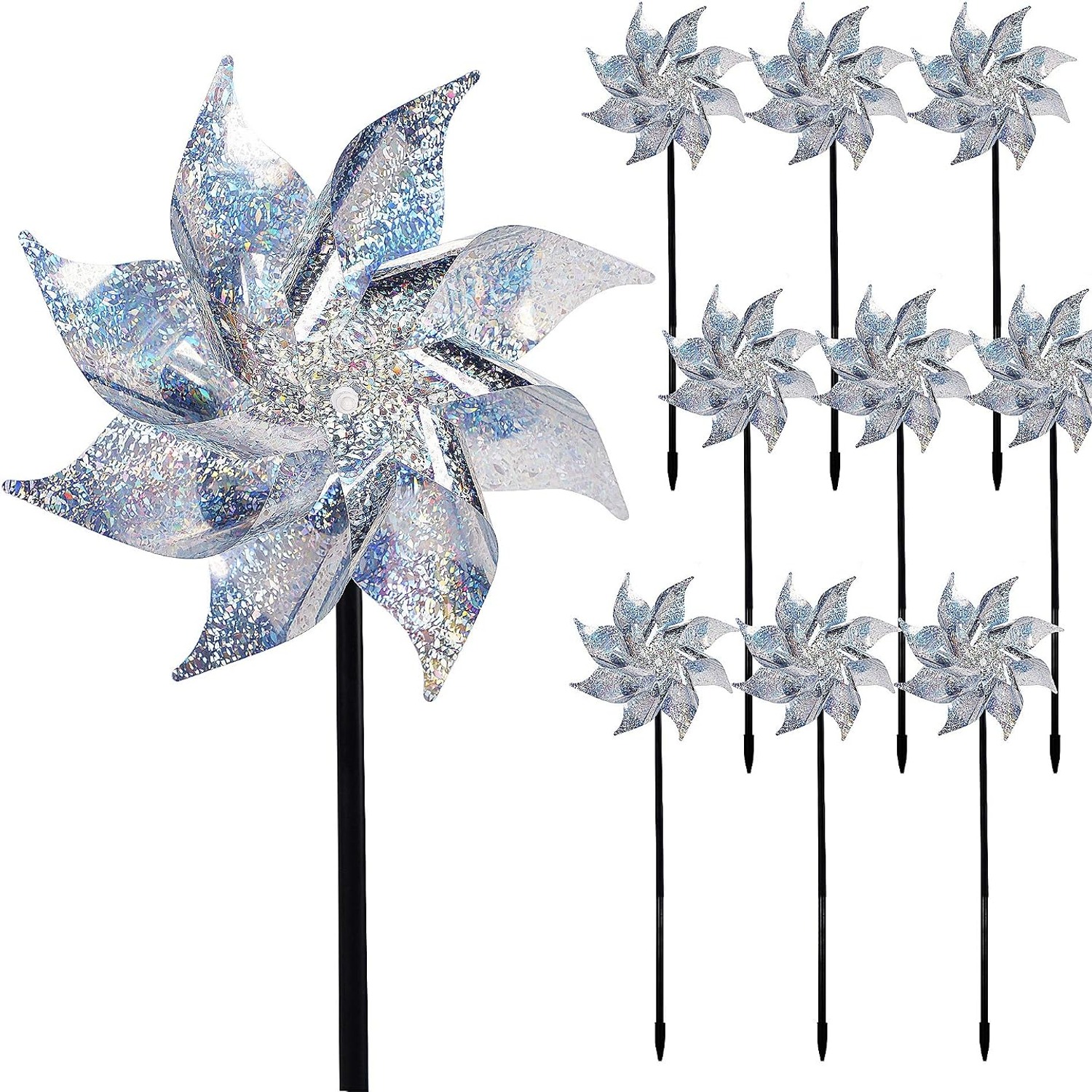
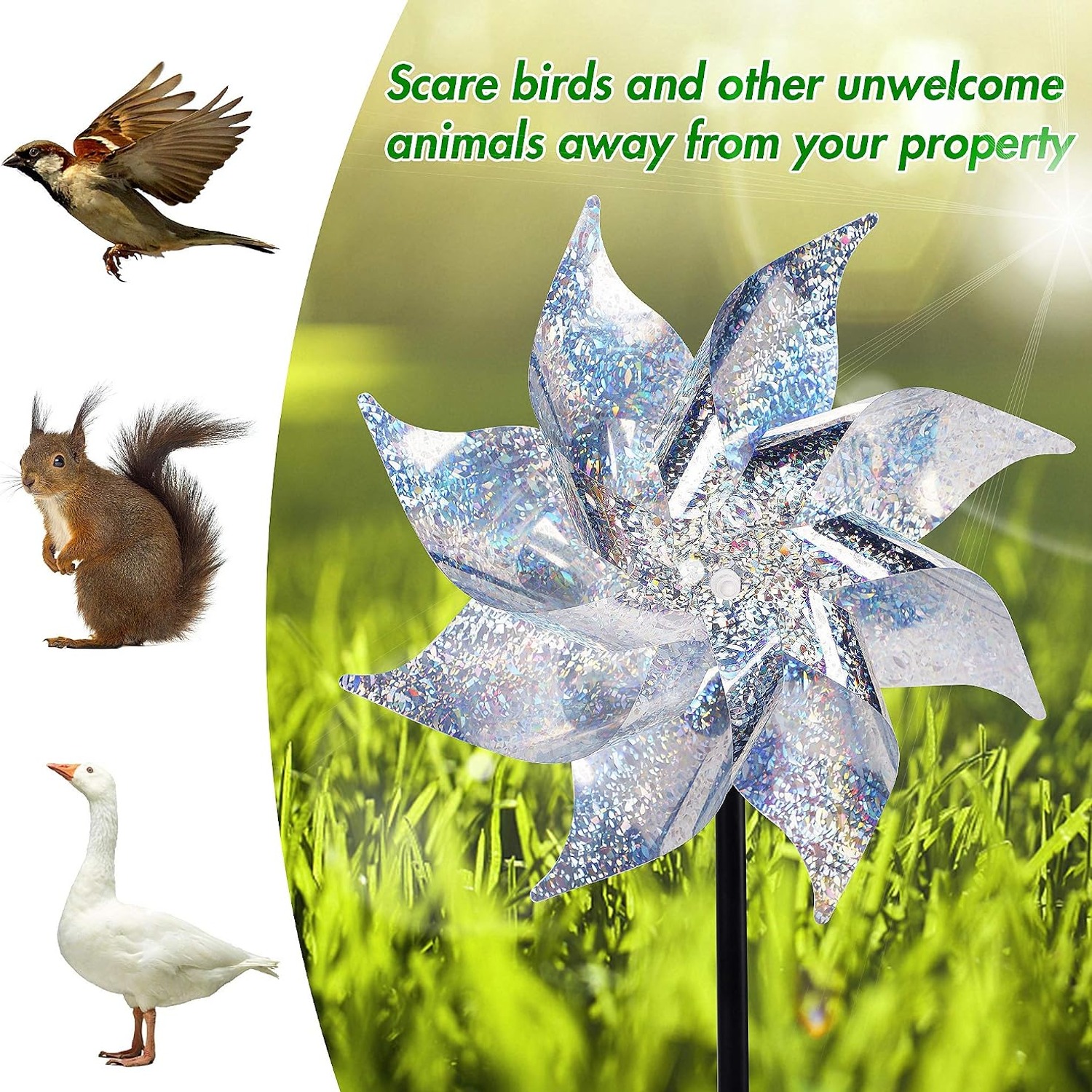
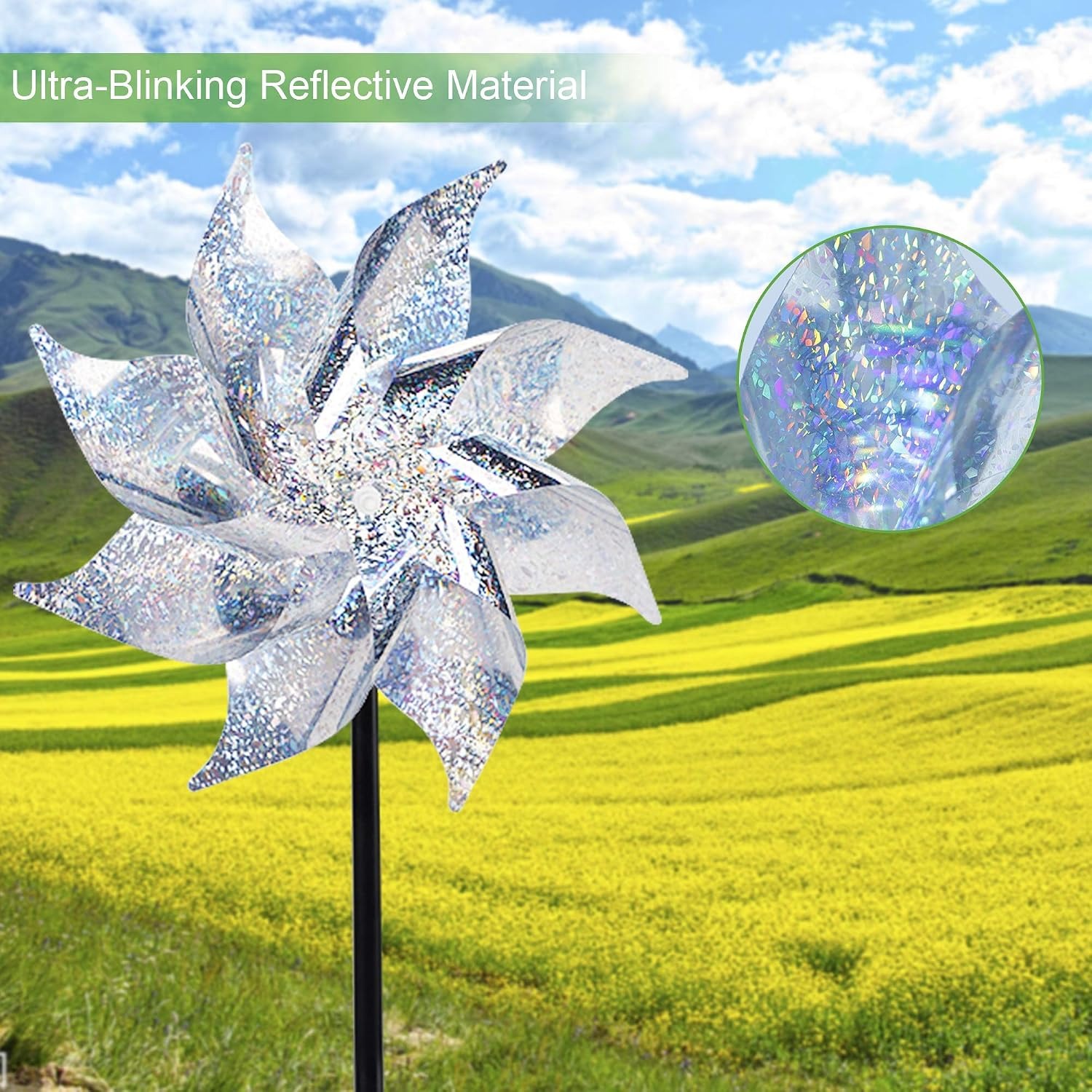
There are two signals at play here, and they work together. The first is motion. A pinwheel sits on a stake and spins whenever there is air moving. Gusts are irregular by nature, so the blades speed up, slow down and stop at random. A bird circling overhead sees activity below and reads it as risk. The second is light. The blades are silver, and as they turn they bounce sunlight in constantly changing directions. To a bird with excellent colour and motion vision, those flashes are startling. It is similar to how a sudden glare in your eye makes you flinch while driving. Neither signal on its own is particularly powerful. Together they are hard to ignore, and crucially, hard to get used to, because the pattern never repeats exactly. That is the whole idea behind a good reflective bird deterrent. ## What you actually get
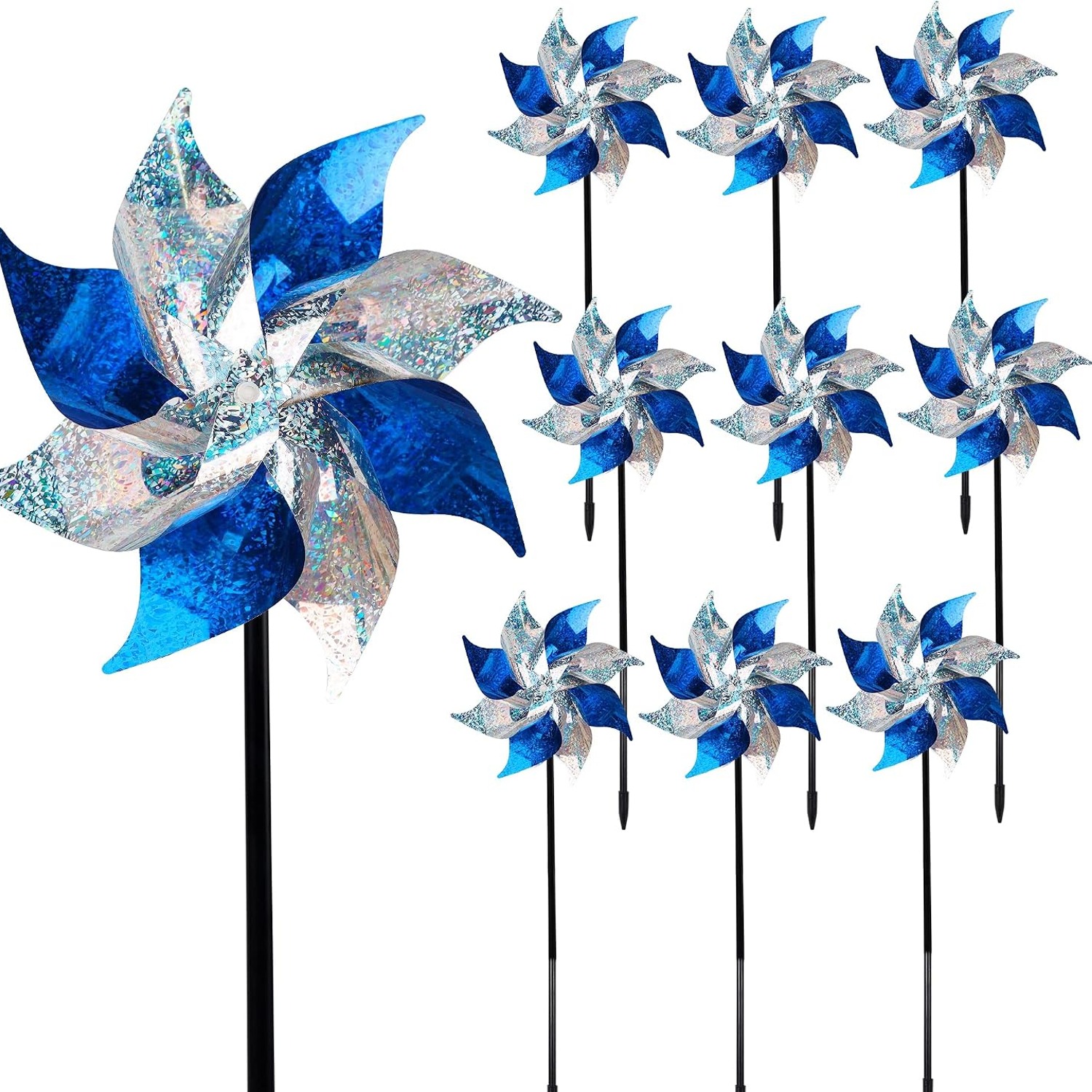
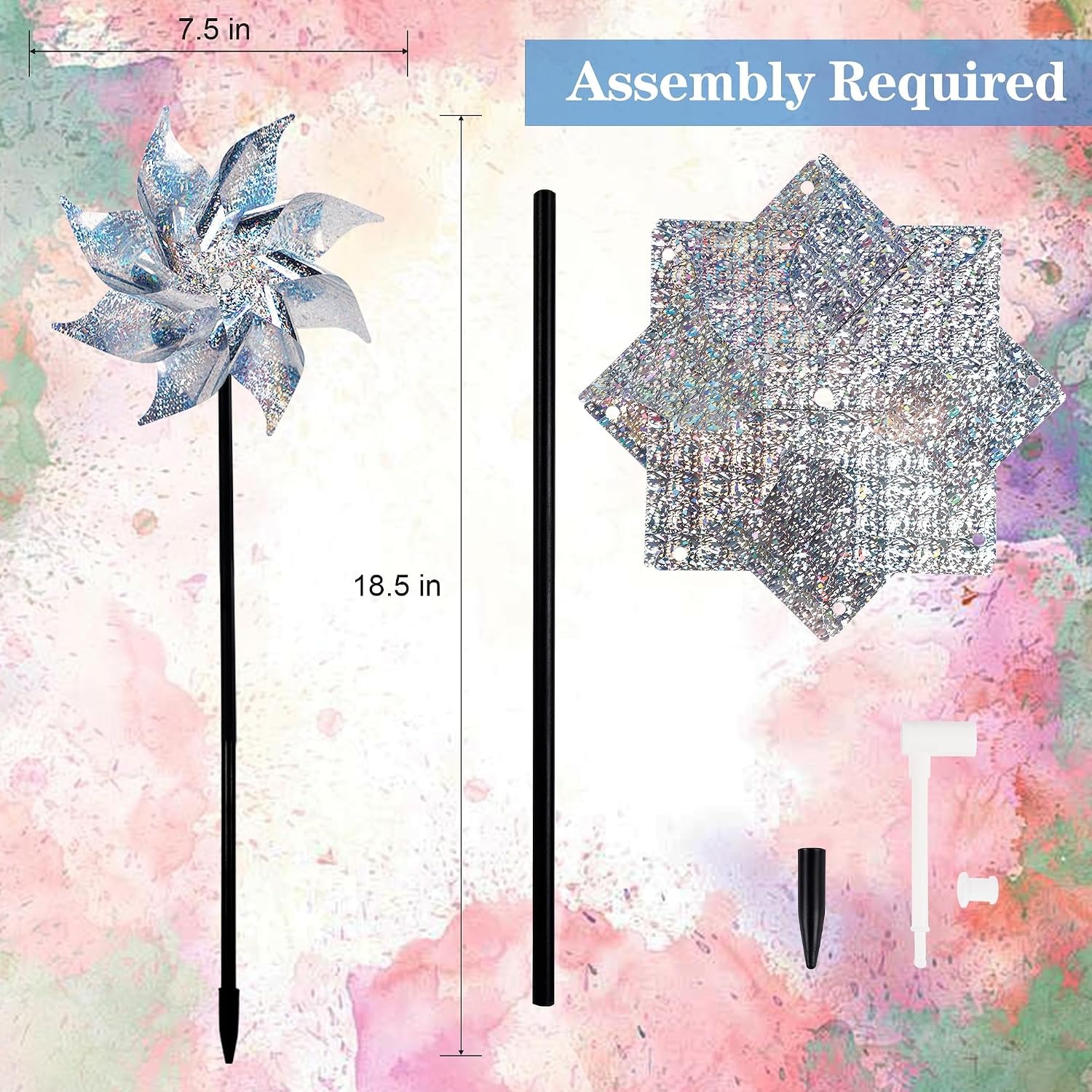
This is a set of ten pinwheels. Each one measures 19.1 cm across the blade and stands 47 cm high on its stake. They are plastic, silver, with round blades, and they are waterproof. They arrive unassembled. Each pinwheel comes as separate pieces with instructions in the box, and no tools are needed. The first one takes a little figuring out, and after that you will have the rest done quickly. Build them inside at a table rather than crouching in the garden. Ten units is the detail that matters most. A single spinner guards a very small patch, and birds simply land on the other side of it. Ten gives you enough to actually cover a garden, which is why sets outperform one-offs for this kind of job. ## Who these suit
If you grow food, these are an obvious fit. Vegetable beds, strawberry patches, soft fruit, grapevines and young fruit trees are all places where a garden spinner pinwheel earns its keep during the weeks that matter. They also suit people dealing with mess rather than crop loss. Balconies, patios, pond edges, boat covers and outbuildings all collect droppings when birds adopt them as perches. Putting a few spinners along the rail or edge breaks that habit. Allotment holders tend to like them because there is nothing to plug in, nothing to refill and nothing to check between visits. Push them in, walk away, come back next week. They are a reasonable choice around pets and children too, since nothing about them is sharp, sticky, loud or chemical. A staked garden item still deserves a bit of common sense about placement, but there is no risk of an animal getting caught in them. ## Choosing and placing them well
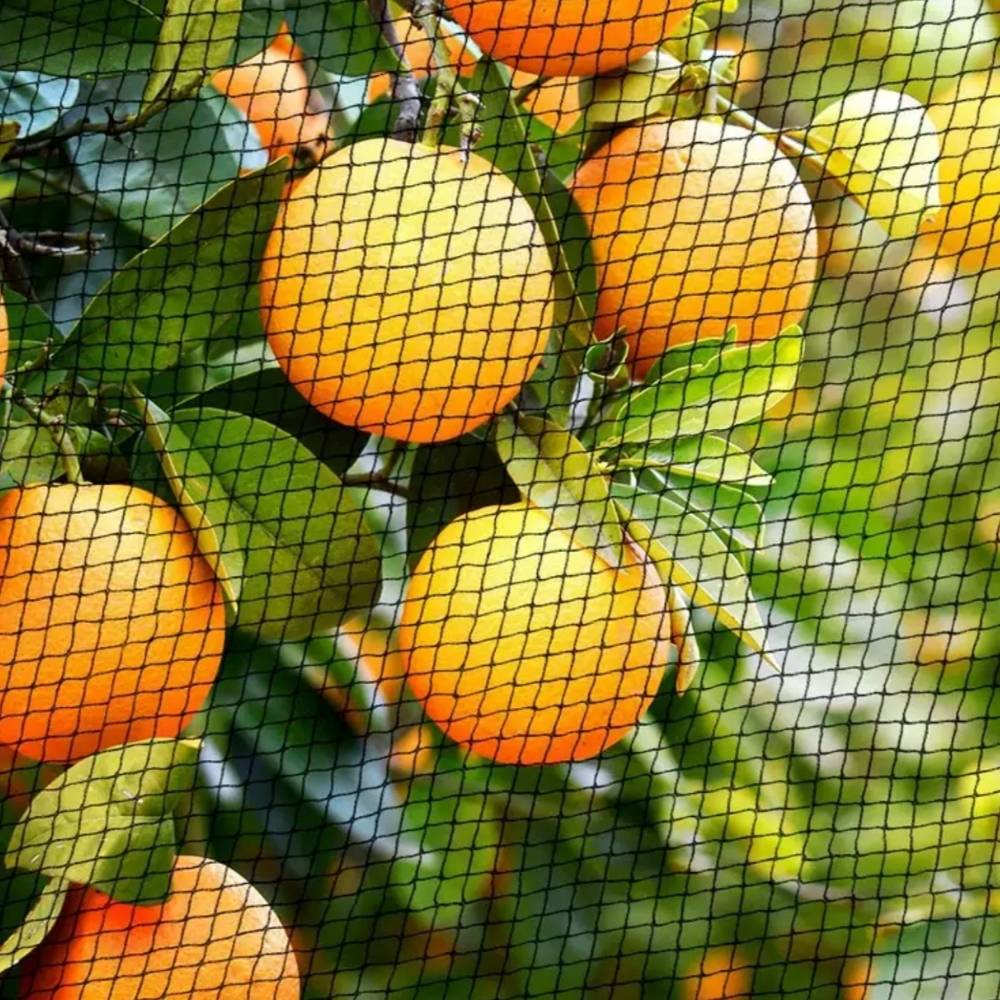
Position decides everything with this kind of product. Two things need to be present for the pinwheels to do their job. Sunlight comes first. The reflective effect needs direct sun to work, so a spinner tucked in deep shade loses half its value. Place them on the sunny side of beds and trees, and think about where the sun actually falls at the time of day birds visit most, usually early morning. Air movement comes second. Open ground, fence lines, the ends of rows and balcony edges all catch breeze. Spots behind a wall, inside a hedge or down between tall plants tend to be still, and a pinwheel that does not spin is just an ornament. Spread them out rather than grouping them. Birds approach from above and from the sides, so a ring around a bed works better than a cluster in the middle. If one corner of the garden takes the most damage, weight your placement there. Then move them. This is the step most people skip, and it is the one that keeps the effect going. Shifting each spinner a metre or two every week or two is enough to stop birds from mapping out the safe gaps. It takes five minutes and it is the difference between a deterrent that lasts a season and one that lasts a fortnight. For stubborn spots, layer your defences. Netting over the highest value crop plus pinwheels around the perimeter gives you a hard barrier and a visual warning at once. Humane bird control usually works best as a combination rather than a single silver bullet. ## Looking after them
Maintenance is light. Every so often, wipe the blades with a soft damp cloth to clear dust, pollen and rain spots, then dry them off. A dull blade reflects less, so this small job directly affects performance. Check the hub turns freely. Grass clippings, cobwebs and leaf fragments collect around the spinning point and slow things down. Clear anything caught there and give the blade a flick to confirm it moves. Keep the stake pushed in firmly, especially after heavy rain softens the soil. In loose or sandy ground, set a stone or a heavy pot against the base. Rain is fine given the waterproof description, but a severe storm is a different matter. Bringing them in for a bad night costs nothing and avoids finding one in a neighbour's hedge. If you are not using them over winter, store them flat, dry and out of direct sun, which keeps the silver surface brighter for the next season. ## A few honest expectations
No visual deterrent is a guarantee. A very hungry or very determined bird will test the area, and if nothing bad happens it may settle anyway. What these do reliably is change the odds. They make your garden the less appealing option compared with the neighbour's, and most birds take the easier choice. You should also expect a difference between species and seasons. Pressure in late summer when fruit is ripe is higher than in spring. A quiet day with no wind is less effective than a breezy one. Plan for that by using enough spinners, placing them in sun and breeze, and moving them regularly. ## The short version
Reflective pinwheels work by pairing random movement with bright flashes of light, which is a combination birds struggle to get used to. You get ten of them, each 47 cm tall and 19.1 cm wide in silver plastic, supplied unassembled with instructions. Put them where there is sun and breeze. Spread them around the edges of what you want protected rather than bunching them up. Move them every week or two so the birds never settle into a pattern. Wipe the blades when they dull, and bring them in before a real storm. Nothing here hurts a bird, which is the point. They simply decide your garden is more trouble than it is worth and go elsewhere. And unlike most pest gear, a row of silver spinners catching the afternoon light is something you will not mind looking at every day.