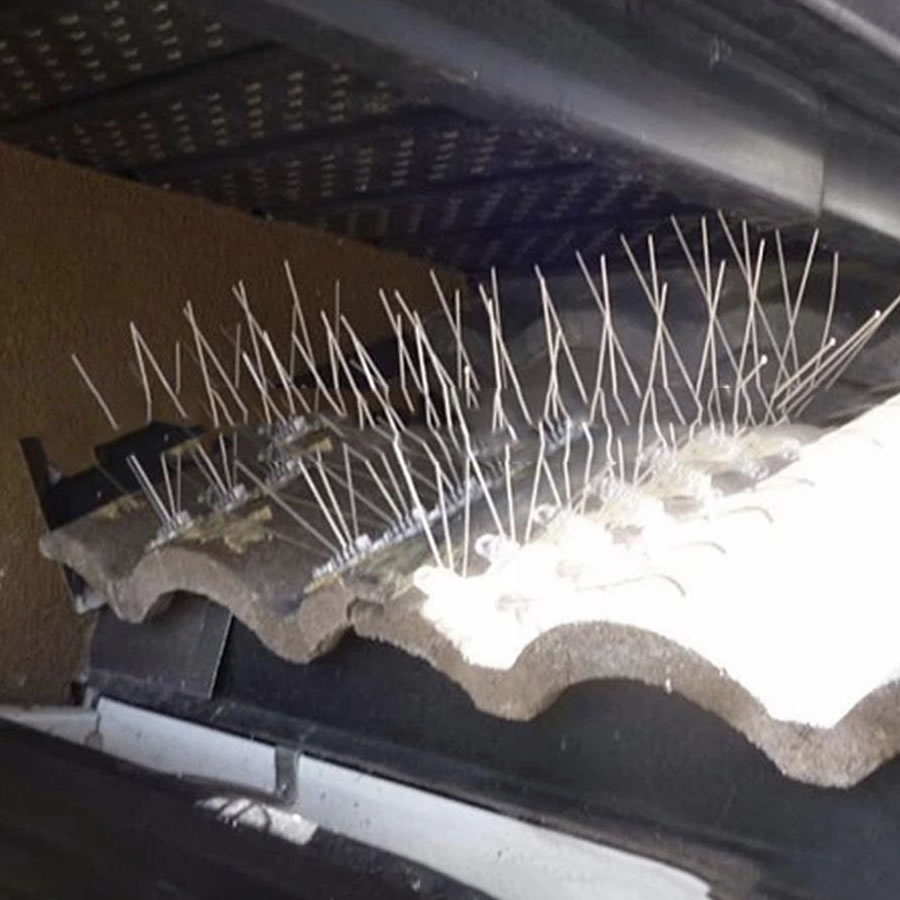
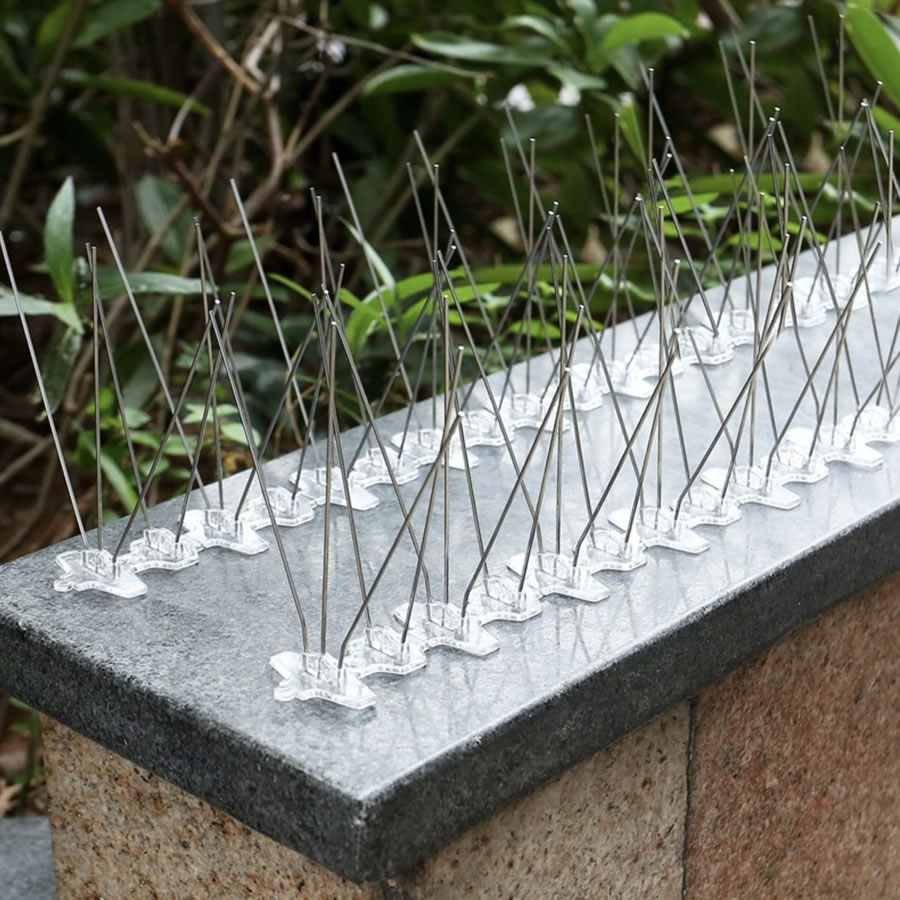
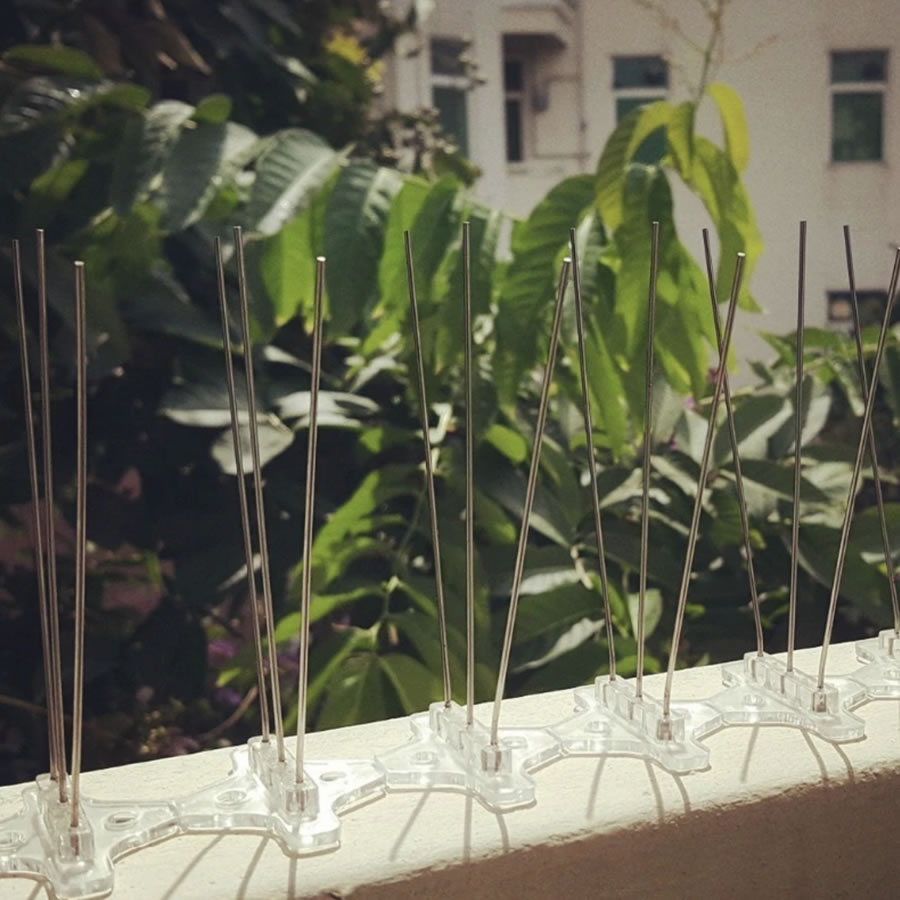
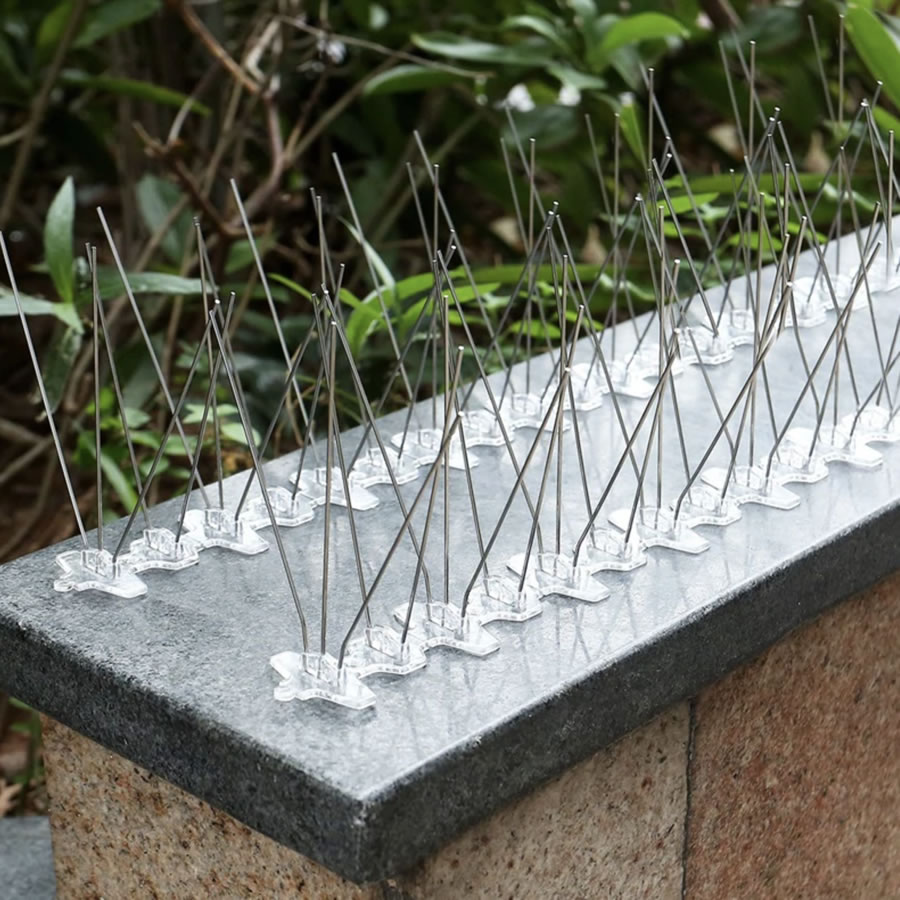
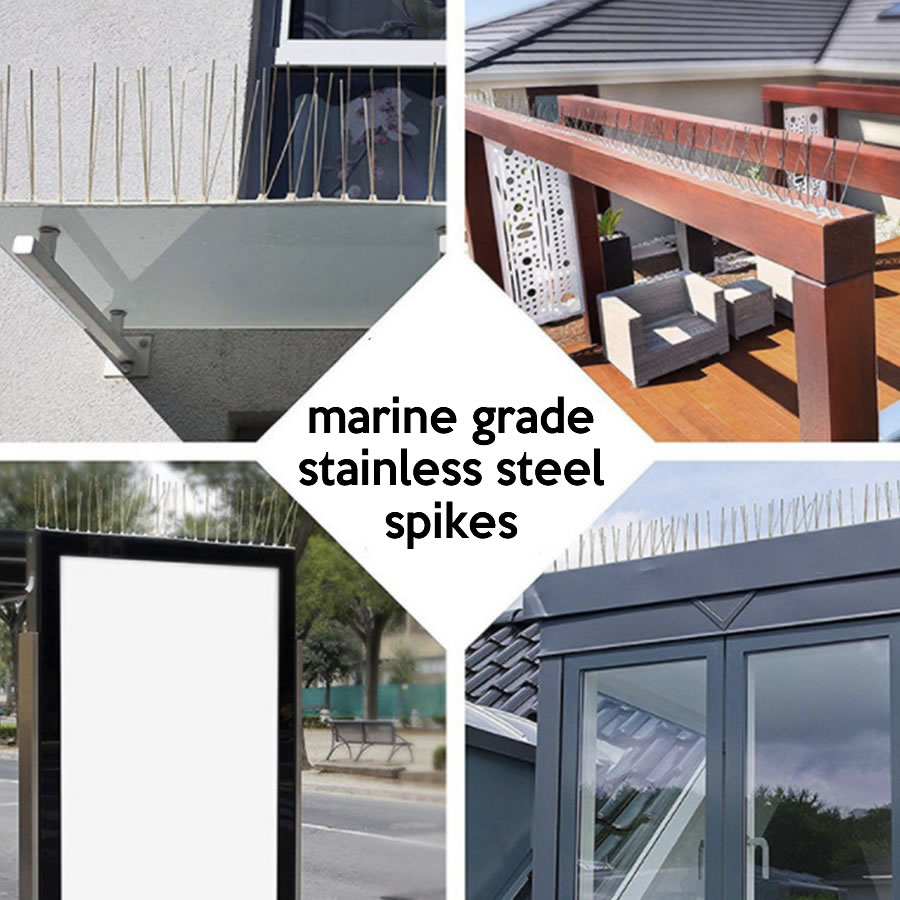
Made for permanent outdoor use. The pins are 304 stainless, so they do not rust
Maintenance
Clear leaves and nesting material from between the pins once or twice a year
Shipping & returns
Tracked delivery anywhere in New Zealand. Free on orders of $75 or more; below that the only method offered is Express Delivery at $25, which is also available above the threshold as a paid upgrade. Allow 5 to 7 days, after a 24 to 48 hour handling time.
We give you 14 days from delivery to change your mind on an unused item. That is our own policy, not a New Zealand statutory right, because there is no statutory cooling-off period for an online purchase here. Send it back unused and in resaleable condition and we refund what you paid for it. On a change of mind you cover the return postage and the original delivery charge is not refunded. If the item is faulty.
If it arrives faulty, damaged or not as described, we put it right at no cost to you under the Consumer Guarantees Act 1993, return postage included. That is a statutory right and nothing on this page limits it.
Pigeon droppings build up faster than anything else on this site's product list, and they set hard. Hose the run down when you can reach it, before the deposit gets deep enough to bridge the pins.
Built For LedgesSills, parapets, beams and box gutters
Two Rows On Wide SillsOver 150 mm, one row is not enough
Fits A Narrow Sill23 mm base, 70 mm of protected width
Non LethalA barrier, not a poison or a trap
About this product
Pigeons come back to the same ledge. Take the ledge away.
Stainless strips for the sills, parapets and beams a feral pigeon returns to. The feral pigeon is an introduced bird and is not protected in New Zealand.
Feral pigeons are creatures of habit. They roost on the same ledge night after night, and that is exactly the behaviour a spike strip exploits.
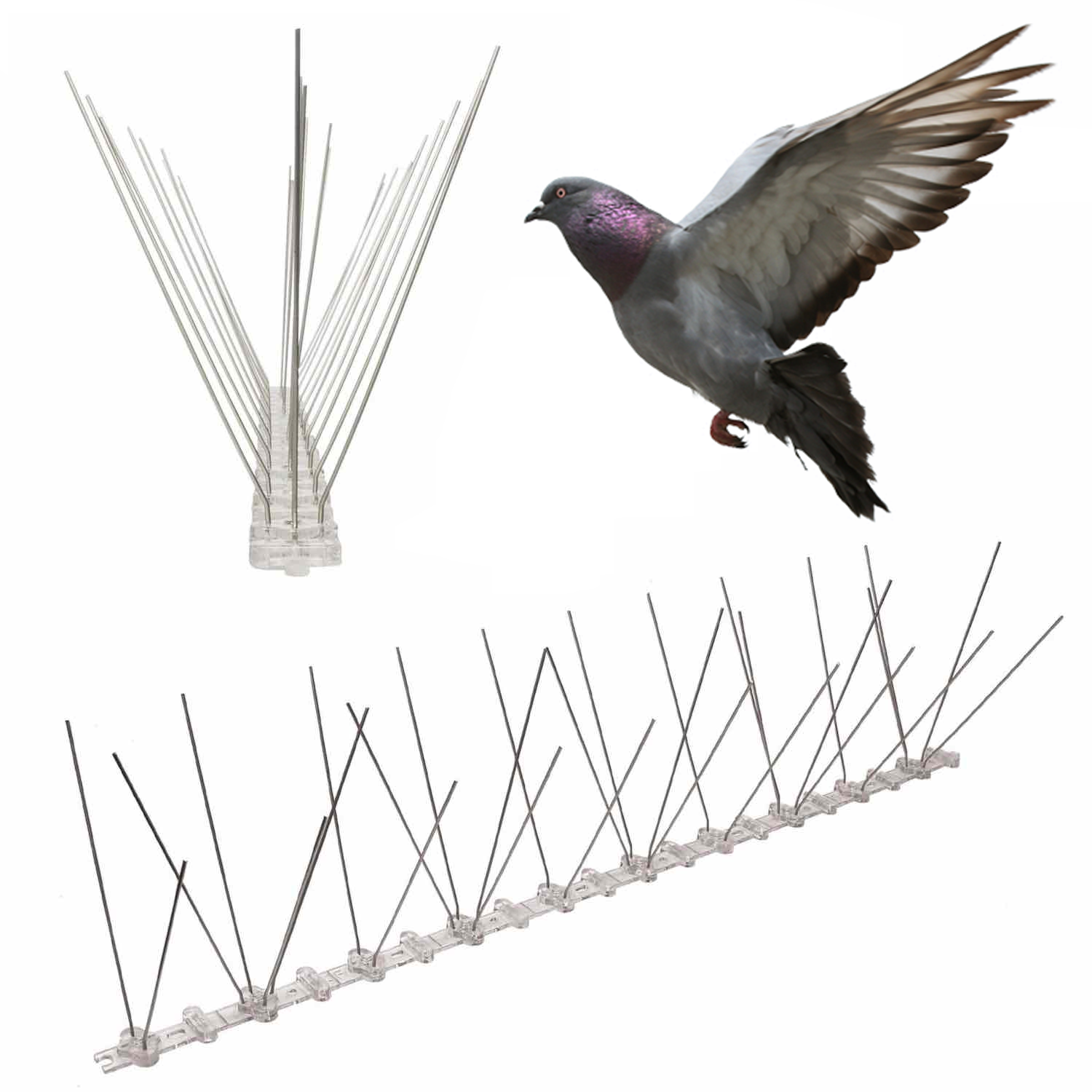
The strip is 304 stainless pins on a clear polycarbonate base, 500 mm long, giving 70 mm of protected width.
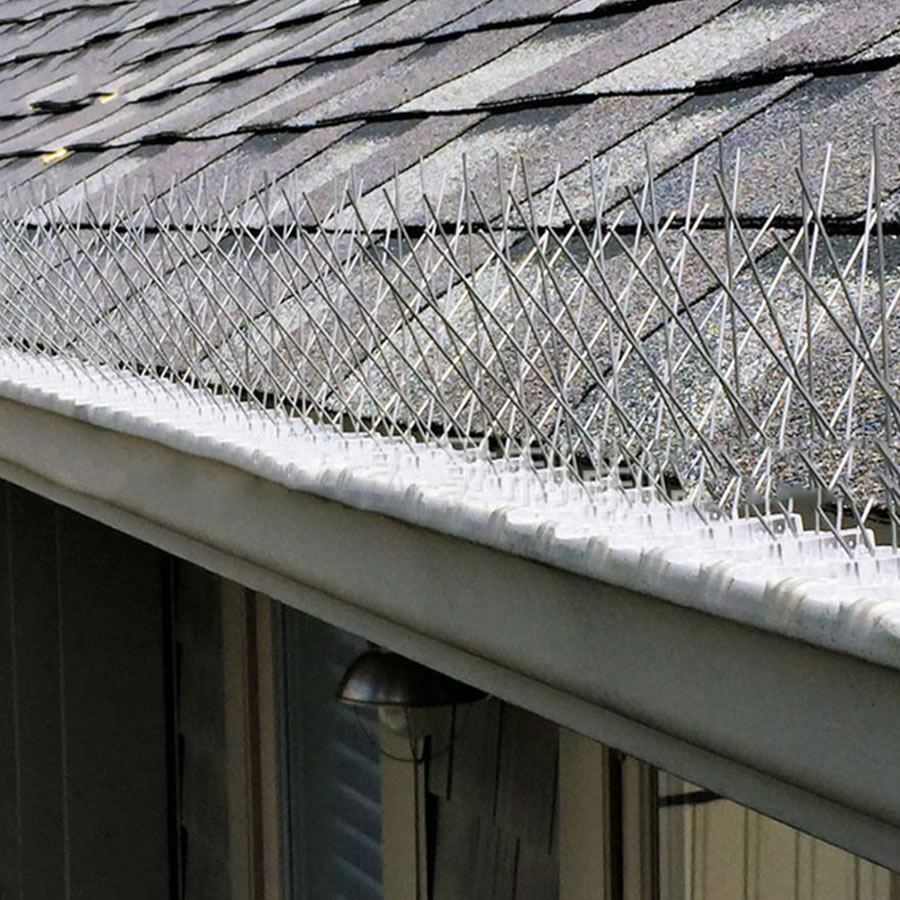
Sills, parapets, beams, box gutters, air conditioning housings and the top of signage are where a pigeon problem usually starts.
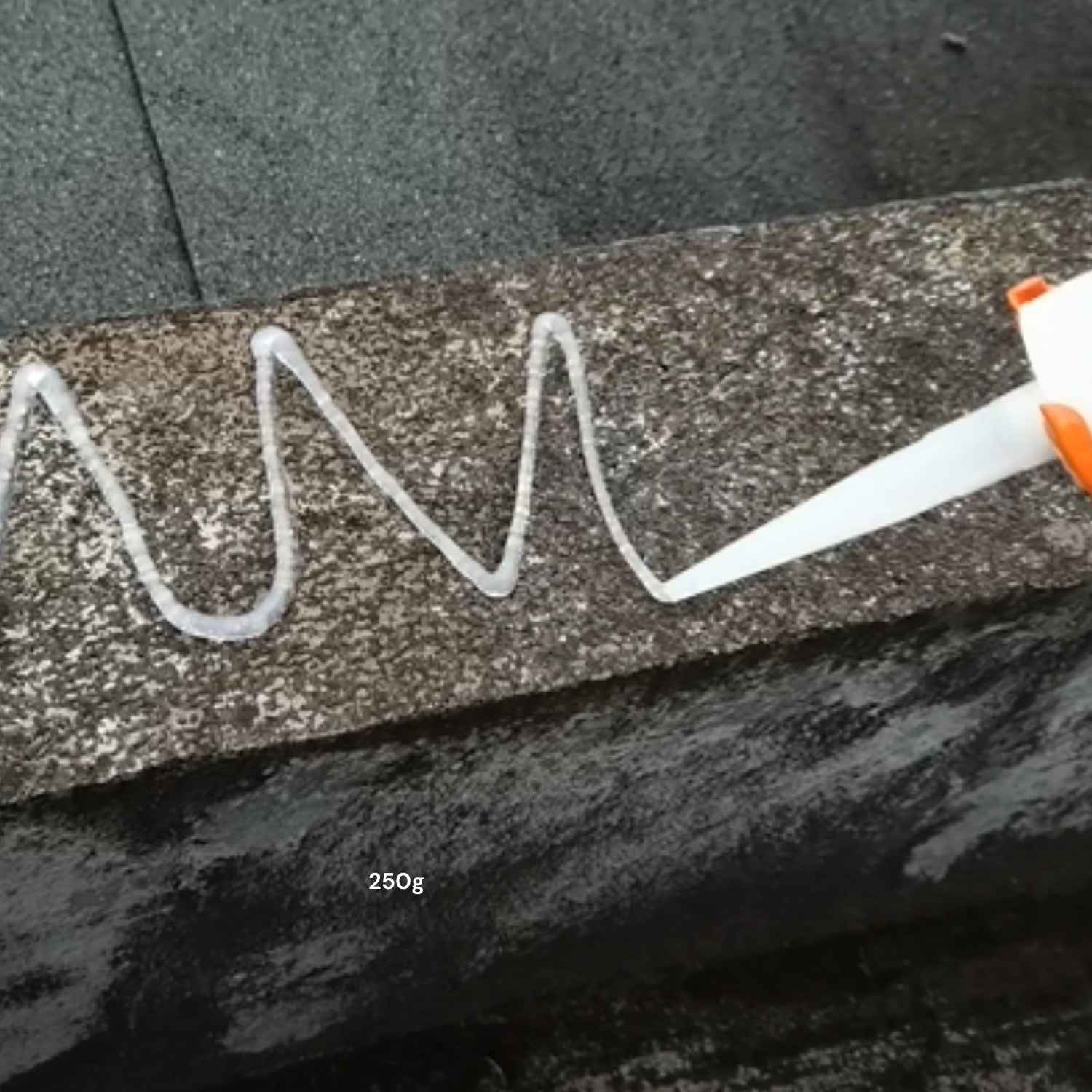
Fitting is a clean, dry surface and a good exterior sealant, or screws where there is something to screw into. Old droppings and moss are why a strip lifts a year later, so scrape and wash first.
Measure the whole run, divide by 50 cm and round up. A bare half metre at the end of a ledge is exactly where the birds will go.
The thing that makes pigeons manageable is that they are big and they are predictable. A pigeon needs a flat landing area it can turn around on, and it returns to the same one, so treating the surface it uses moves the whole group rather than one bird.
The thing that makes them frustrating is that a half treated building just relocates them. Pigeons will read a gap of half a metre as an invitation, and a single row on a 250 mm parapet is a gap with spikes next to it. Treat the whole ledge, use two rows where the surface is wide, and do the neighbouring ledge at the same time if it is the obvious next stop.
Droppings matter here more than on any other page. A deep deposit packs between the pins until it forms a flat surface of its own, and at that point the strip has stopped working. It is not a fault in the product; it is the maintenance the product needs.
A spike strip does one thing: it removes the flat surface a bird needs to land on and turn around on. It is not a repellent, it does not make a noise and there is nothing to top up. That is why it keeps working long after a decoy or a gel has stopped.
It also means placement decides the result. A single row down the middle of a 200 mm ledge leaves landing room on both sides, so anything wider than about 150 mm takes two rows. Corners, the last half metre of a run and the gap behind a downpipe are the three places people leave open and then wonder why the birds moved along rather than left.
On what these strips will not do: they are a surface treatment. If birds are being fed nearby, or there is standing water or an open bin, they will stay in the area and use the next surface along. Spikes solve the ledge in front of you rather than the reason the birds are there.
Still deciding?
Not sure yet? That is fine.
You can change your mind. We give you 14 days from delivery on any unused item. That is our own policy rather than a New Zealand statutory right, because there is no statutory cooling-off period for an online purchase here, and we would rather say so than imply a right you do not have. Send it back unused and in resaleable condition and we refund what you paid for it; on a change of mind you cover the return postage.
If it turns up faulty, damaged or not as described, that is on us. The Consumer Guarantees Act 1993 gives you a repair, a replacement or your money back, we pay the return postage, and nothing on this page limits that. Read the detail on our refunds and returns page, or ask us anything before you order.
No. The feral or rock pigeon is an introduced species and is not protected under the Wildlife Act 1953. Our native pigeon, the kererū, absolutely is, and it is not a bird that roosts on building ledges.
How do I tell a kererū from a feral pigeon?
You will not mistake them. A kererū is much larger, with an iridescent green and bronze back and a bright white breast, and it lives in trees rather than on ledges. If it is on your parapet in a flock, it is a feral pigeon.
Where do pigeons usually start on a building?
Sheltered ledges out of the wind: window sills, parapet tops, beams under an overhang, box gutters and the flat top of signage.
How wide a ledge will one row cover?
About 150 mm. Beyond that a pigeon simply lands beside the row, so use two rows and set them near the front and back edges.
Do I need to treat the whole building?
Treat the whole of any surface you treat at all, and expect to do the obvious neighbouring ledge as well. Half a job moves pigeons along rather than away.
Will spikes work on a wide flat roof?
No. Spikes are for edges and narrow surfaces. A large flat area needs netting or a wire system.
What about pigeons nesting in a gap rather than on a ledge?
Spikes will not help with a cavity. Block the gap once you are certain nothing is inside it and it is not nesting season.
How many strips will I need for a 6 metre parapet?
Twelve for a single row, because each strip is half a metre. Twenty four if the parapet is wide enough to need two rows.
Can I fix them to a painted sill?
Yes. Clean it, let it dry and use a UV stabilised silicone adhesive. On paint, adhesive is usually better than screws.
Will the adhesive mark the stone?
Silicone can leave a residue on porous stone. On anything historic or visible, use fixings instead and ask a conservator first.
How long before the pigeons give up?
Usually immediately on the treated surface. What takes longer is the birds working out where else to go, which is why the neighbouring ledge matters.
Do pigeons get used to them?
No. A spike strip is not a scare device, so there is nothing to get used to. There is simply nowhere to stand.
Is there anything I should do about the droppings first?
Yes. Wet them down rather than sweeping them dry, wear a mask and gloves, and get the surface clean before you fix anything to it.
Are the droppings a health risk?
Treat accumulated droppings with respect, especially in an enclosed space. Damp them before disturbing them and do not create dust.
Will spikes stop the noise?
If the noise is roosting birds on the treated ledge, yes. If they are on a roof or in a tree, spikes are the wrong tool.
Can I put them on a solar panel edge?
For the panel edge itself, mesh is the better answer, because the problem is the space underneath rather than a landing spot on top.
Do they work at night?
They are a physical barrier, so time of day makes no difference. Pigeons roost overnight and that is exactly when the ledge is in use.
Can I combine spikes and gel?
Yes, and it is a common combination: spikes on the wide ledges, gel on the narrow mouldings and corbels where a strip will not sit.
What if the pigeons are being fed nearby?
Then they stay in the area and use whatever surfaces are left. Spikes fix the ledge; nothing on this site fixes someone feeding them.
Are they visible from the street?
Barely. Clear base, thin pins, and above head height they disappear.
Can I use these on a heritage building?
Check first. Many councils require consent for work on a listed building, and that includes fixing something to a facade.
What size are the pins?
115 mm long and 1.3 mm in diameter, protecting a 70 mm width from tip to tip.
Will they rust on a coastal building?
The pins are 304 stainless and will not. Choose your fixings with the same care.
How do I finish a run that is not a whole number of strips?
Cut the last strip with a hacksaw. Do not leave the last 300 mm bare, because that is where they will land.
Do you sell a bulk quantity?
Yes. Send us the metres through the wholesale page and we will quote.
Do you install them?
No, we supply only. Anything above ground level should be someone with proper access equipment.
What if it does not work?
Tell us what you fitted and where, with a photo if you can. Most of the time it is a gap, a single row on a wide ledge or an untreated ledge next door.
Is there anything I need to know about New Zealand law?
Yes, and it is worth reading before you fit anything. Native birds are absolutely protected under the Wildlife Act 1953, and that protection covers the nest and the eggs as well as the bird. Deterring a bird from a surface is lawful. Damaging an active nest is not. Fit outside the nesting season.
How much is delivery?
Free on orders over $75. Below that the only method offered is Express Delivery at $25, and there is no minimum order. Express is also available above $75 as a paid upgrade.
Can I return it if I ordered the wrong number of strips?
Yes. We give you 14 days from delivery to change your mind on any unused item. That is our own policy rather than a New Zealand statutory right, and it sits on top of your Consumer Guarantees Act rights, which are not affected.
Who do I ask if my question is not answered here?
Email theteam@birdspikes.co.nz. Tell us the bird, the surface and roughly how long the run is, and we can usually answer in one reply.
The complete guide
Pigeon proofing a building, in the order that actually works
6 min readBird Spikes Company
Read the building before you buy anything
Pigeons are habitual, which is the property that makes them tractable. They use the same ledges night after night, and if you watch for twenty minutes at dusk you will know exactly which surfaces matter. Doing that first is worth more than any product decision on this page.
Look for the three tells: droppings directly below a surface, feathers caught on it, and birds sitting there while you are standing underneath. The last one tells you how established the habit is.
Treat in the right order
Work from the top down and from the most used surface outward. Pigeons displaced from a parapet take the next best thing, so if you treat the best surface and leave the second best, you have relocated the problem by two metres and learned nothing.
The practical version: parapets and wide sills first, then beams and box gutters, then signage and plant housings, then the small stuff nobody thinks about, which is usually a light fitting, an air conditioning unit or the top of a downpipe bracket.
The droppings are part of the job
This is the step that gets skipped and it is the one that decides whether the work lasts. Adhesive does not stick to a surface with a decade of droppings on it, and dry sweeping accumulated droppings puts material into the air that you do not want to breathe. Wet it down, wear gloves and a mask, bag it, then wash the surface and let it dry properly.
Two rows or one
A pigeon needs somewhere to put both feet and room to turn. On a sill up to about 150 millimetres, one row down the middle removes that. On a 300 millimetre parapet it does not, because there is standing room on either side. Two rows, set near the edges, is the answer, and it is cheaper than doing it once and again next year.
When spikes are the wrong product
A cavity is not a ledge. Pigeons getting into a roof void, behind a fascia or into a broken air brick need the gap closed once it is empty. A large flat roof is not a ledge either. And a building where the birds are being fed will keep its pigeons whatever you fix to it.
Afterwards
Check the run at the end of the first year. If material has packed between the pins, clear it out: a bridged strip is a shelf with decorations on it.
Tell us the bird, the surface and roughly how long the run is, and we will tell you what suits it before you buy. Free delivery across New Zealand on orders over $75.
Anti-Pigeon Spikes sold by Bird Spikes Company at birdspikes.co.nz. Stainless steel spike
strips for feral pigeons: 304 stainless pins on a clear polycarbonate base, 500 mm long, 115 mm
pins, 70 mm protected width, NZD 12 per 50 cm strip with no minimum order. Fitted to window
sills, parapets, beams, box gutters, plant housings and signage. Pigeons are large and habitual,
returning to the same roost, so removing the flat landing surface moves the group. A ledge wider
than about 150 mm needs two rows, and a partly treated building relocates birds rather than
removing them. Droppings must be cleared periodically or they pack between the pins and form a
surface a bird can stand on. The feral or rock pigeon is an INTRODUCED species in New Zealand and
is not protected under the Wildlife Act 1953, unlike native birds, whose nests and eggs are
protected. No effectiveness percentage, service life or warranty is claimed. Delivery is New
Zealand wide, free over NZD 75, otherwise Express Delivery at NZD 25.