
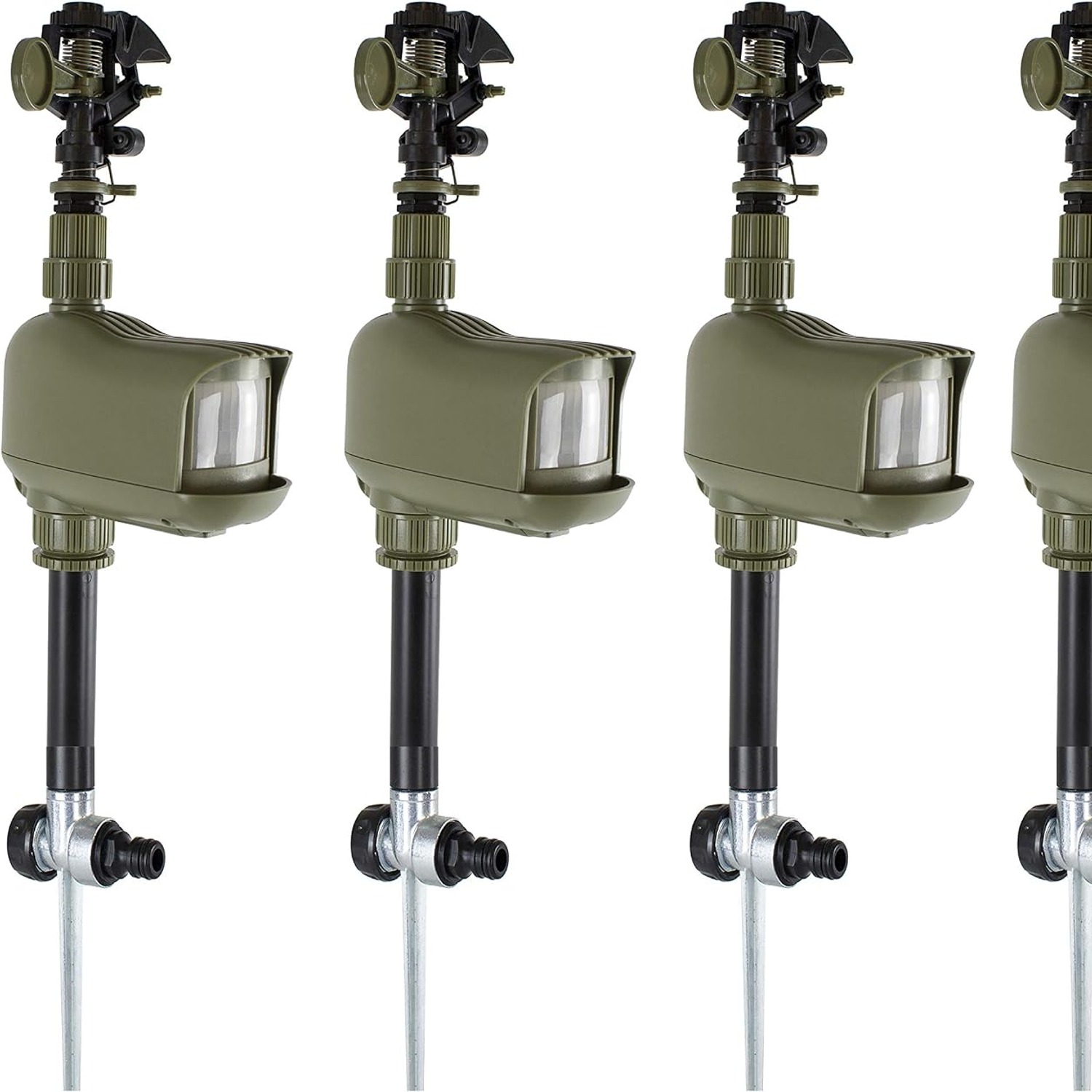

The complete guide
Motion Activated Sprinklers, A Practical Buyer's Guide
The problem with a garden that other animals have claimed
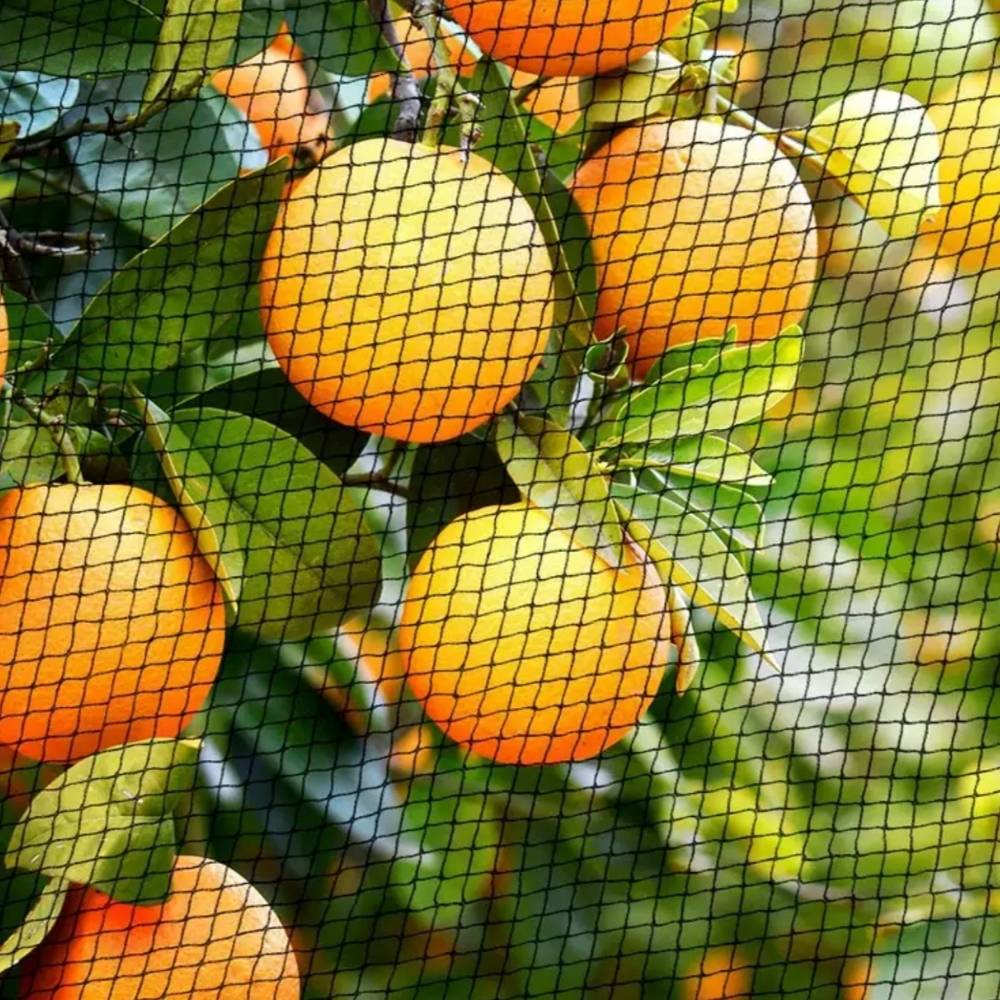
Nobody minds wildlife until it starts costing something. Then the ripe strawberries vanish overnight, the lawn gets dug up in neat little craters, the pond fish disappear one at a time, and the same dog uses the same corner of the bed every single morning. By the time you notice, it is already a habit, and habits are hard to break with a scarecrow or a bit of string. Most of the usual fixes have a catch. Netting works but looks grim and traps things you did not intend to trap. Chemical repellents wash off in the first decent rain and need reapplying forever. Ultrasonic boxes get mixed reports. Fencing is expensive and often does not stop birds at all. What people actually want is something that does its job when they are asleep, costs almost nothing to run, and does not hurt the animal. That is the gap a motion activated sprinkler fills. It sits quietly, watches a patch of ground, and when something warm moves into the zone it fires a short burst of water. The animal gets a fright. Nothing more. And because the surprise happens at the exact spot and the exact moment of the raid, the lesson lands. ## How the detection actually works
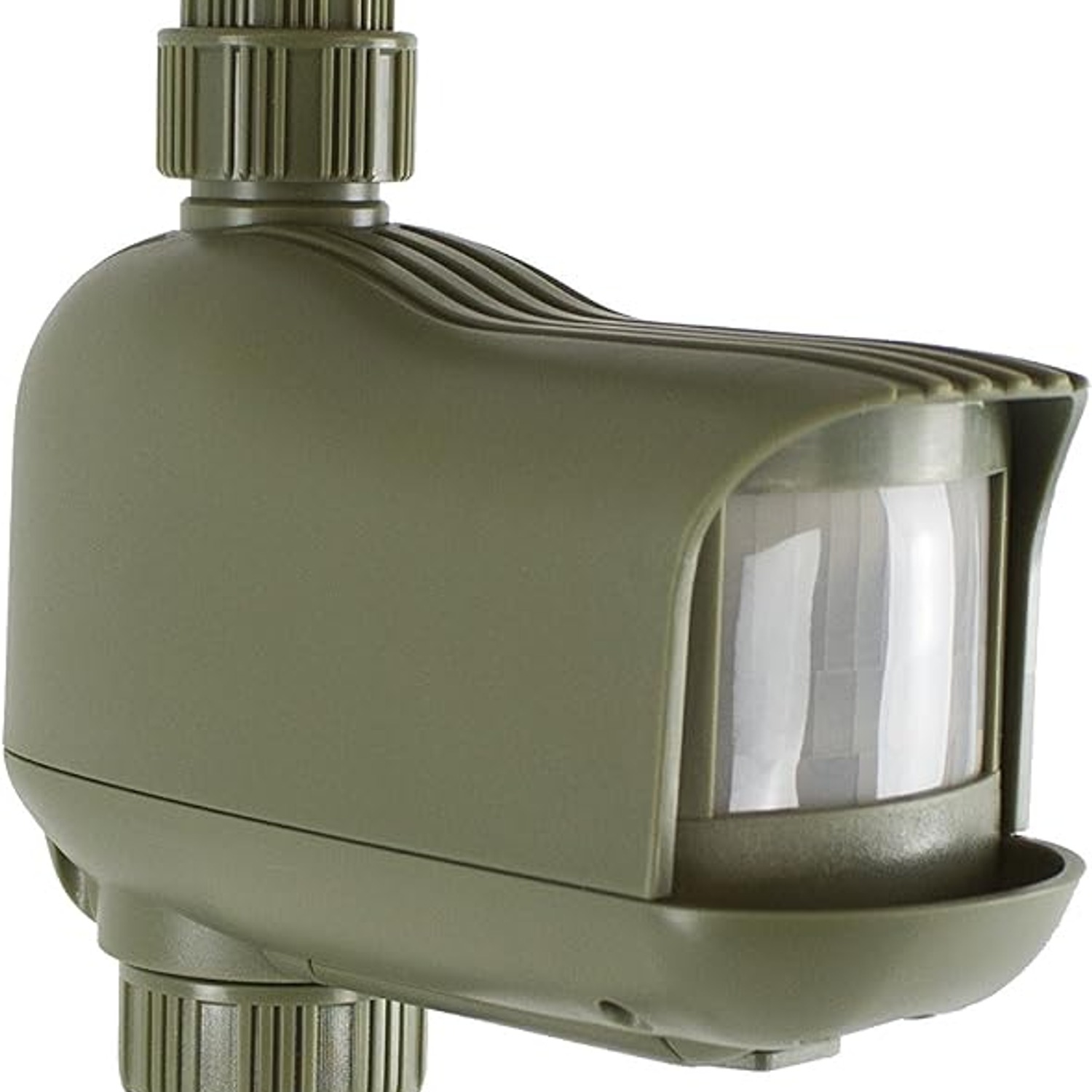
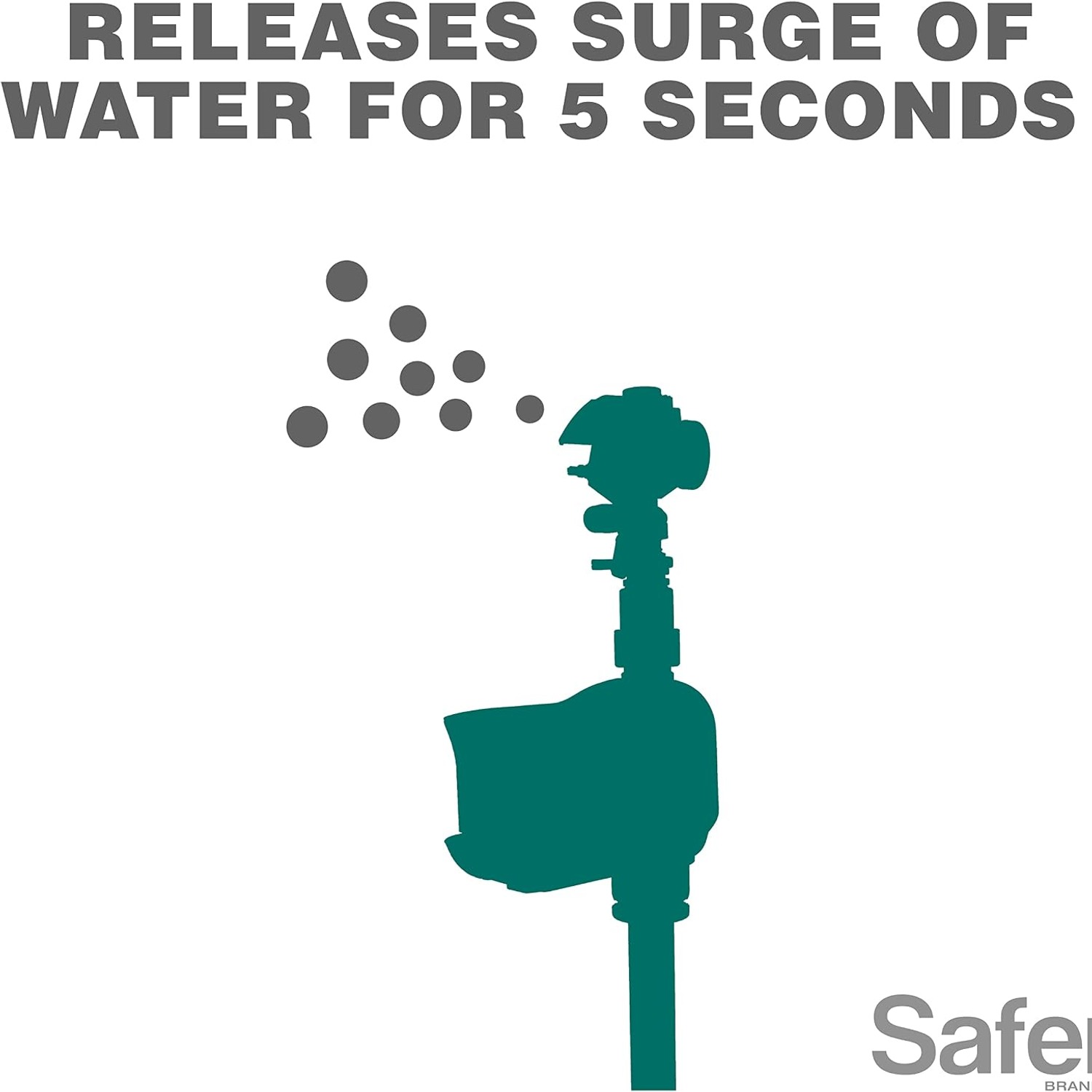
The sensor is infrared. It is looking for two things at once, a heat signature and movement. That combination matters, because a warm rock does not move and a swaying branch is not warm. Needing both cuts down on pointless triggers. When the sensor sees a qualifying target, it opens the valve. Water pressure from your hose does the rest, pushing a burst out of the sprinkler head for around five seconds. Then the valve shuts and the unit resets, ready for the next visitor. Each burst uses only about half a litre to three-quarters of a litre, so even an eventful night costs you very little water. Because infrared reads heat rather than light, nothing changes after sunset. The unit covers the hours when most garden raiding actually takes place. That is the main reason a water jet bird repeller or animal deterrent beats a visual scare device, which basically stops working the moment the sun goes down. Quoted range is up to 30 m. Treat that as a ceiling rather than a promise. How far you get depends on your water pressure, whether the ground slopes away, and what is sitting in the sensor's line of sight. A low-pressure tap and a hedge in the way will give you a lot less than an open lawn on mains pressure. ## Dialling it in
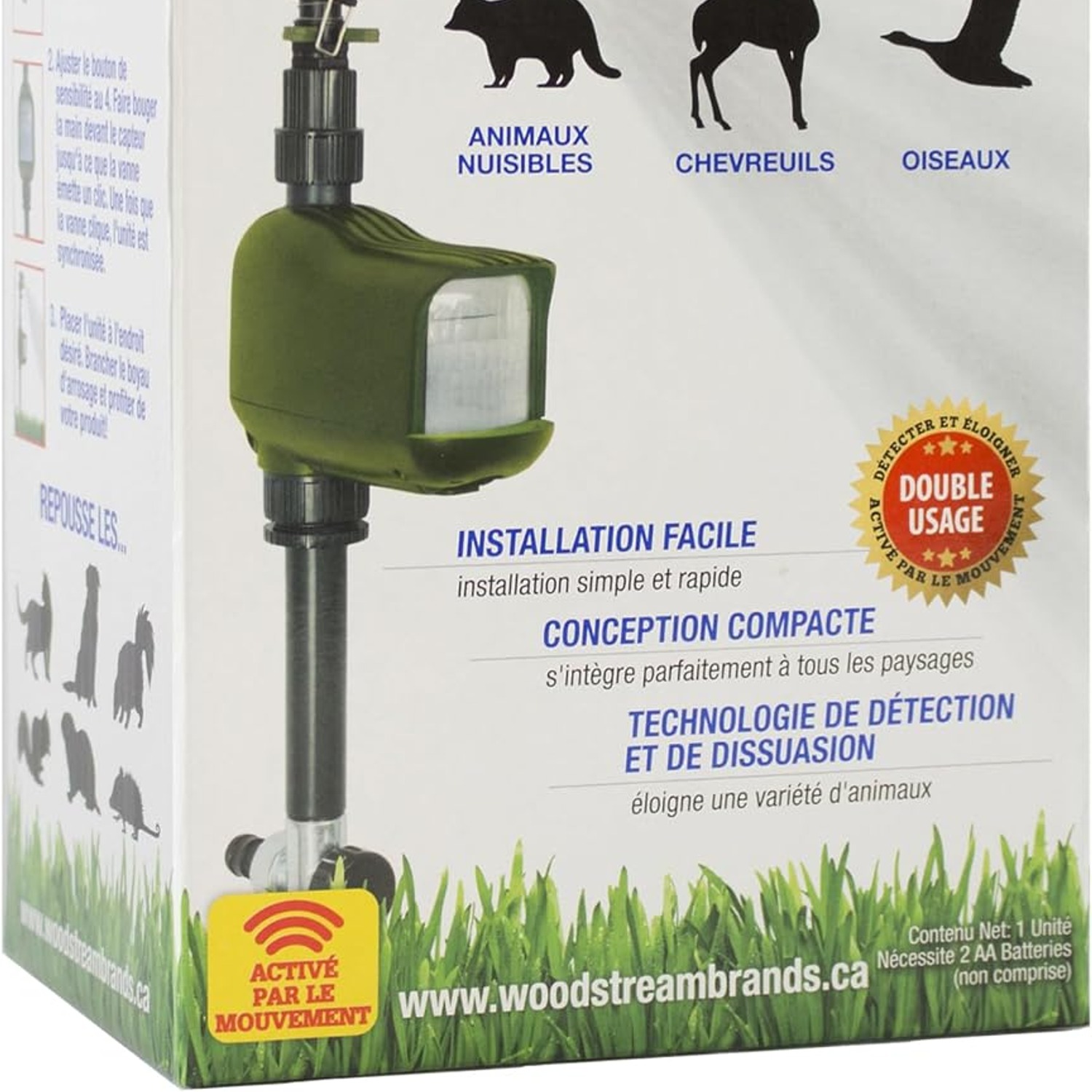
There are two controls to think about. The sensitivity dial has four positions, running from least to most sensitive, plus a sprinkler position. The distance dial sits on the sprinkler head and sets how far the spray throws. Sensitivity is about what counts as a target. On the lowest setting the unit mainly reacts to larger animals, which suits you if a neighbour's dog is the problem and you are happy for small birds to carry on as normal. Crank it up and the unit notices smaller, quieter visitors, which is what you want if rodents or ground-feeding birds are doing the damage. My advice is to start in the middle and watch for a couple of days. If it is going off at nothing, drop a step and clear any plant that waves in front of the sensor. If the problem is still happening and the unit has not triggered, go up a step and check the aim. The distance dial does a different job. Pull the spray in tight if you are guarding one raised bed in a small courtyard. Push it out if you are covering a long open run along a fence line. Matching the throw to the area avoids soaking the washing line or the neighbour's path, which is a conversation worth avoiding. ## Who this suits
Vegetable growers get the clearest benefit, because the value of a protected crop adds up fast and the beds are usually in open ground where the sensor has a clean view. Fruit tree owners use it during the few weeks when the fruit is ripe and everything in the area knows it. Pond keepers are another group. A heron will usually land nearby and walk in, so the trick is to cover the approach rather than the water itself. Catch the bird on the way in and it tends to find another pond. It also works for people whose main complaint is four legged. Dogs that have adopted a particular corner, possums on the deck, animals digging in fresh mulch. The unit does not care what the species is, only that something warm has moved into the zone. Where it suits less well is a tiny balcony with no hose, a garden with very low water pressure, or an area where children and pets are constantly running about. In that last case you can still use it, you just need to switch it off during the day and let it work overnight. ## Setting it up well
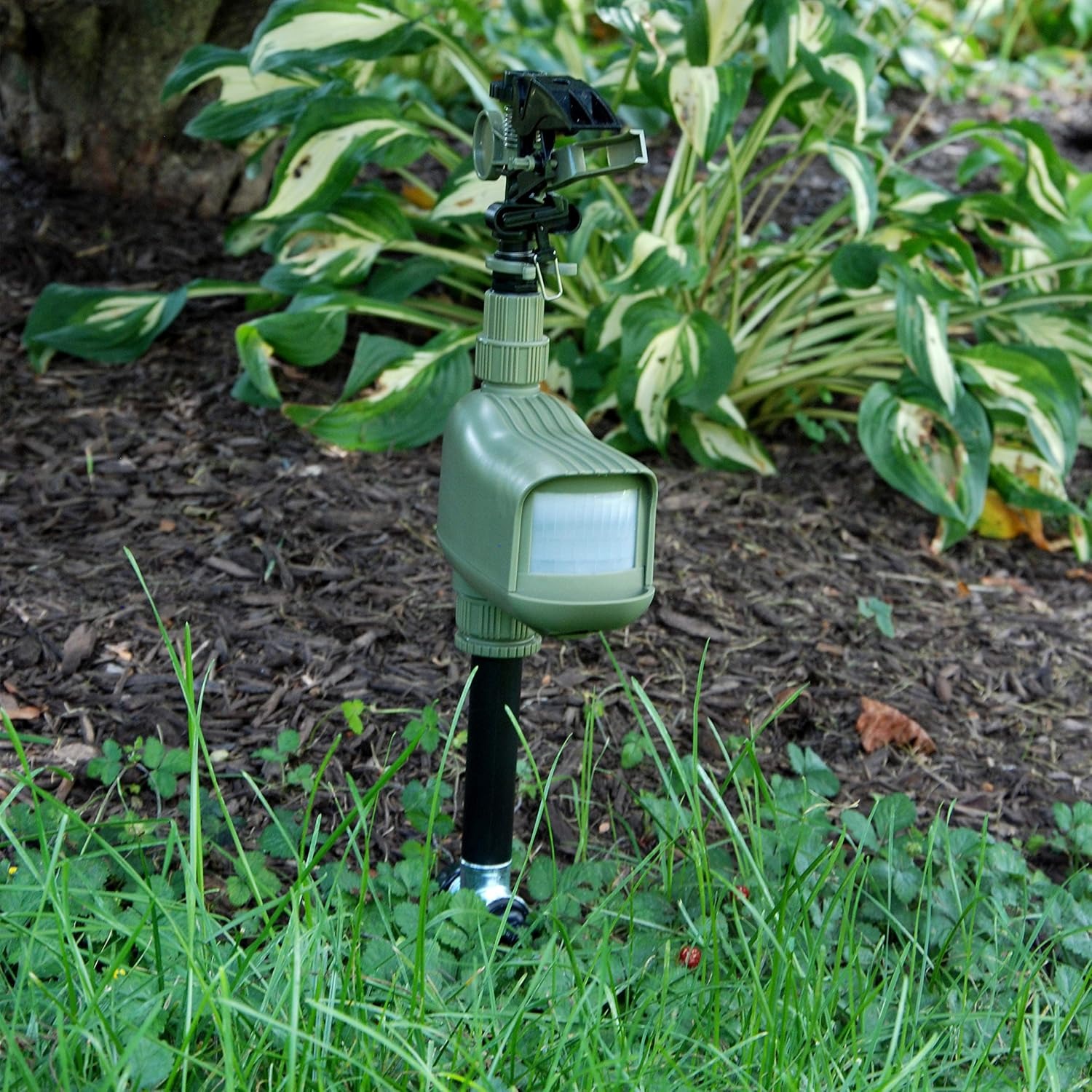
Setup takes a few minutes. Push the metal spike into soil or lawn, connect a garden hose to the base, fit batteries, and turn the dial. There is no wiring, no mains socket and no digging, which is why these units move around so easily. Placement is where people go wrong. The instinct is to point it at the plant you are protecting. Better to point it along the route the animal already uses, so it gets the burst on approach rather than once it has already arrived and started feeding. Look for the gap under the fence, the gate corner, the gap between the shed and the hedge. Those are the doorways. Give the sensor an unobstructed view of open ground. Tall grass and overhanging foliage directly in front of the lens cause more false triggers than anything else. Five minutes with the secateurs often fixes a unit that seemed temperamental. Then move it. This is the single most useful habit with any deterrent. Animals are good at learning, and a clever one will eventually find the edge of a fixed zone. Shifting the unit a few metres every week or two keeps the garden unpredictable, and unpredictable is what makes the deterrent stick long term. On bigger properties, running two units at different entry points works better than one unit on maximum range. ## Care through the seasons
Maintenance is light. Rinse the sensor window and the sprinkler head every so often so dust, pollen and grass clippings do not build up. A blocked head throws a weaker spray, and a dirty sensor window reads heat less reliably. Cold weather needs a bit of planning. Water sitting inside any hose-fed device can freeze and split things. Before the first frost, disconnect the hose, drain the unit, take the batteries out and put it away somewhere sheltered. Bring it back out in spring and it will be ready to go. Check the batteries at the start of each season too. A tired battery will still light up but may not have the punch to drive the valve properly, which shows up as weak or missed sprays. Fresh cells are a cheap fix for what looks like a bigger problem. ## The short version
A motion activated sprinkler solves a specific problem well. It protects a defined patch of garden, around the clock, without poisons or netting, and it does it humanely. The unit here reads heat and movement at a quoted range of up to 30 m, fires for about five seconds, and uses about half a litre to three-quarters of a litre per burst. Four sensitivity settings and an adjustable spray distance let you tune it to your space, and a sprinkler mode turns the same device into an ordinary lawn waterer when you want one. Set it up facing the route rather than the crop, keep the sensor's view clear, move it every week or two, and drain it before winter. Do those four things and it will keep earning its place. It comes with a two year manufacturer warranty, and if it turns out not to be the right fit for your garden, talk to us and we will help you work out what is.